

A first date after work sounds simple until one person is leaving an office near Central and the other is still answering emails across town. Add a packed train, an ambitious restaurant booking and no agreed finishing time, and a small meet becomes a project. You do not need a spectacular itinerary. You need a plan that respects two tired people, makes conversation possible and gives either person a comfortable way to leave. Here is a practical way to build that evening in Sydney.
Start with two starting points
Before choosing a suburb, ask where each person will be coming from that evening. Home addresses are unnecessary; an office precinct or transport stop is enough. Then ask what time they can realistically finish. A 6 pm booking is not helpful if someone normally leaves work at 6.15.
Compare the complete journey, including transfers and the walk at the other end. Fair does not always mean meeting at the geographical midpoint. It means neither person quietly carries all the inconvenience. If their route is awkward, choose somewhere easier this time and share the planning next time.
Choose a neighbourhood before a venue
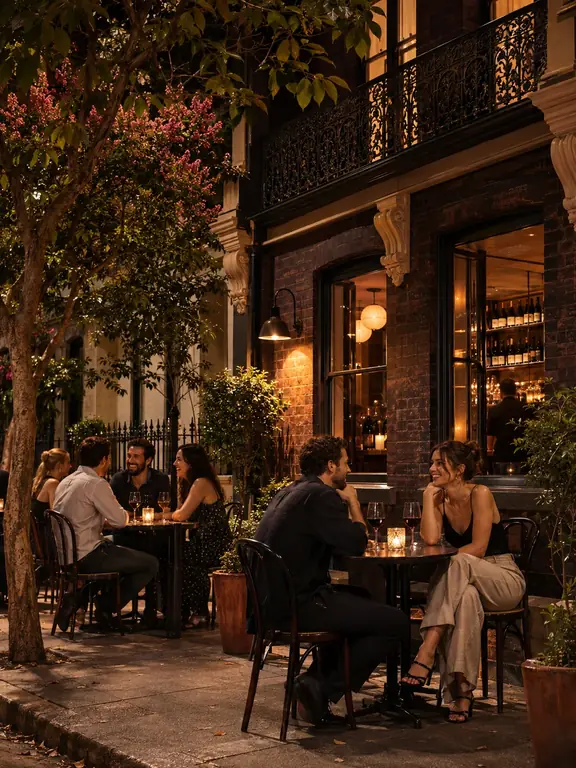
Surry Hills and Darlinghurst offer different starting points for a small-bar evening. Destination NSW describes cafes, bars and restaurants around Surry Hills, and small bars in Darlinghurst. Use those neighbourhood descriptions as inspiration rather than assuming every address will suit a first conversation.
Make the choice personal: would you both enjoy a casual pub, a quiet cafe or a small wine bar? Someone who does not drink should not have to explain that twice. Look for a place with appealing alcohol-free options and an atmosphere that does not depend on ordering another round.
Build a sixty-minute first stop
Offer a first stop that can feel complete after roughly an hour. That is a planning suggestion, not a rule to enforce with a stopwatch. It takes pressure off the first hello because you are agreeing to meet, not promising an entire evening.
Try: “Would you be up for a drink near Central on Thursday? I can do 6.30 until about 7.30.” If they suggest coffee or another time, treat it as useful information. A plan should make it easier to answer honestly. Avoid booking dinner and a ticketed activity before you have discovered whether conversation feels comfortable.
If you are meeting directly from the office, leave a short buffer for changing your shoes, having a snack or simply stopping work mentally. Tell the other person if your finish time is unpredictable. You can offer a later coffee on another day instead of making them fit around an uncertain evening. Reliability is more useful than appearing permanently spontaneous, especially when you have not met before and have no shared routines to rely on.
Check the details that change the mood
Before sending the venue, check its own website for opening hours, booking requirements, accessibility information and the current menu. Photos alone cannot tell you whether a room becomes a loud standing bar after six. If the details are unclear, contact the venue or pick somewhere easier to assess.
Choose one nearby backup in case the first room is full. A backup is different from a compulsory bar crawl. Keep the alternative close enough that moving does not become another commute. If rain is forecast, arrange to meet inside a named entrance rather than underneath an unspecified awning.
Agree on spending without making it awkward
Decide what you can comfortably spend before leaving work. Include the return journey, something to eat and a little flexibility. There is no useful universal first-date price: what feels casual to one person can feel expensive to another.
You can make your preference ordinary: “Somewhere relaxed suits me better than a big dinner.” At the table, ask whether they would like to pay separately or split what you both ordered. Buying a drink does not purchase more time, another venue or physical affection. Clear, ordinary language keeps a small practical decision from carrying unnecessary meaning.
Send one complete confirmation
A useful confirmation contains a place, a time, a meeting point and a loose endpoint. For example: “Thursday, 6.30 at the cafe we picked. Shall we meet just inside the front door? I will probably head off around 7.30.” Add the actual venue link so nobody has to guess which branch you mean.
If work runs late, send a realistic update before the meeting time. Say whether you need ten minutes or need to reschedule. Repeatedly saying “nearly there” helps nobody. If the delay changes the evening substantially, offer a clean alternative rather than expecting the other person to wait indefinitely.
Let the first ten minutes be ordinary
You do not need an impressive opening line after a working day. Ask how their afternoon went, whether they know the neighbourhood or what made them choose this place. Share your own answer instead of firing off a sequence of questions.
Give work talk a little space, then move beyond it. “What have you been enjoying outside work lately?” offers more room than demanding a favourite film or a five-year plan. Notice whether conversation travels in both directions. Pauses are normal; being talked over repeatedly is information. You are learning how the evening feels, not auditioning for approval.
Extend the date only if both people want to
When the first stop is nearly finished, make the next step a real question. “I am enjoying this. Would you like another drink, or shall we call it a night?” leaves two legitimate answers. If you fancy a short walk or a nearby bite, offer that as an option rather than announcing a move.
A pleasant first hour can end there. Someone may have an early start, a long journey or simply enough social energy for one stop. Their decision does not require an argument or a reassuring promise. Thank them for meeting and let the evening have a clear ending.
Plan your own journey home
Check the current journey before leaving and again before heading home. Transport for NSW publishes current light rail information and travel planning tools; use those current services rather than relying on a remembered timetable. Save enough phone battery and money for your preferred return option.
Keep responsibility for your own journey. Sharing a route can be convenient if both people want it, but it should not become the automatic next stage of a date. If a plan changes, tell a trusted person where you are going. Practical independence makes it easier to choose freely whether to continue or leave.
Make the follow-up match the evening
If you enjoyed the meet, a short message can say exactly that: “I enjoyed talking with you tonight. Would you like to do coffee next week?” You do not need to perform indifference or send a long assessment of the connection.
If you do not want another date, be equally clear and brief. A workable first date is not measured by how late it finishes. It is an evening where both people understood the plan, had room to be themselves and could make the next decision without pressure. That is a much more useful result than an elaborate itinerary.

Mia Bennett
Mia Bennett is an editorial pen name used by the Hookups Australia team for practical guides to first dates, everyday communication and Australian city nights. The focus is clear examples, manageable plans and respect for individual boundaries.